

Securing a top rank in UPSC CMS while simultaneously achieving a 2-digit rank in NEET PG is no small feat.
In an exclusive interview with Dr. Varun Agarwal, Dr. Rashi (UPSC CMS AIR 2 & NEET PG Rank 72) shared her blueprint for success. With 14 Gold Medals during her MBBS and a stellar performance in competitive exams, her approach focuses on smart study, resource limitation, and effective time management.
Here is a breakdown of her strategy for future aspirants.
1. The 6-Month Preparation Roadmap
Dr. Rashi emphasizes that you don’t need years of preparation if you are strategic. She started her serious prep during her internship around March when the CMS forms were released.
Phase 1: Foundation (The Textbooks)
- Strategy: Don’t skip standard textbooks. For the first few months, stick to your 3rd and Final Year standard textbooks.
- Why? UPSC CMS questions often test clinical depth that coaching notes might miss. Reading standard books ensures you can handle conceptual questions even if the options are tricky.
Phase 2: The “Sprint” (Targeted Resources)
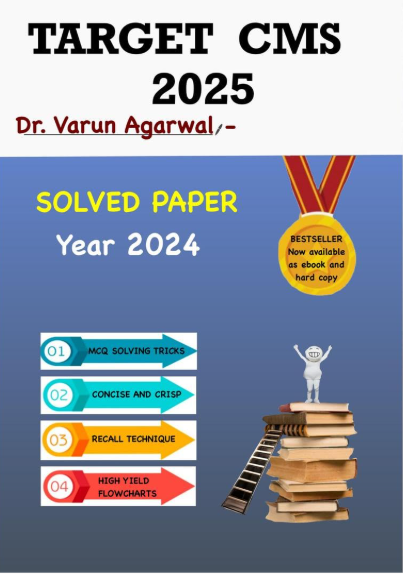
- Strategy: As the exam approaches, switch to focused resources like the Target CMS Book or concise coaching notes.
- Why? UPSC CMS is known for repeating topics. Instead of reading bulky books cover-to-cover, focus on mastering the “Repeated Topics” in depth.
| Feature | NEET PG | UPSC CMS |
|---|---|---|
| Format | Computer-Based Test (CBT) | OMR Based (Offline) |
| Content | Image-based questions common | No Image-based questions |
| Syllabus | All 19 Subjects | Focus on Clinical Subjects (Med, Surg, OBG, PSM, Peds) |
| Challenge | Recall & Speed | Time Management (Bubble Filling) |
2. UPSC CMS vs. NEET PG: Understanding the Difference
While the medical concepts remain the same, the pattern of testing is vastly different.
3. The “Two-Phase” Exam Hall Strategy
One of the biggest challenges in UPSC CMS is filling the OMR sheet within the 2-hour limit for 120 questions. Many students fail to complete the paper.
Dr. Rashi’s Golden Rule for Time Management:
Divide your 2 hours into two distinct phases:
- Phase 1 (First Hour): Attempt all the easy questions you are 100% sure about. Spend the last 10 minutes of this hour filling their OMR bubbles.
- Phase 2 (Second Hour): Tackle the tougher/confusing questions. Spend the final 10-15 minutes filling the remaining bubbles.
- Tip: Never leave OMR filling for the very last minute; it leads to panic and errors.
4. Decoding the UPSC CMS Interview
Dr. Rashi’s interview lasted nearly 45-50 minutes, a sign that the board was engaged. Here is what you need to know:
The Dress Code
- Myth: You must wear a Saree.
- Reality: Dr. Rashi wore a Suit because she was more comfortable in it. Comfort and neatness matter more than the type of traditional wear.
The Panel & Questions
The panel typically consists of an IAS Officer (Chairperson) and Medical Professors.
- Medical Questions: Treated like a Final Year Viva (e.g., Difference between Infection & Infestation, Endemic vs. Pandemic).
- General/Situational Questions (by IAS Officer):
- “Will AI replace doctors in the future?” (Answer: No, AI lacks empathy and surgical hand skills).
- “You are a CMO. How will you manage a COVID-19 outbreak in your district?” (Answer focuses on Teamwork, Task Forces, and Administration).
- Current Health Topics: Nipah Virus, COVID-19 trends.
5. Final Motivation
- Ignore GT Scores: Grand Test scores are just for practice. They do not define your final rank.
- Stay Calm: The UPSC Bhawan has an aura that can be intimidating. Maintain your composure; a calm mind can answer questions that a stressed mind cannot.
Conclusion
Dr. Rashi’s journey proves that with a mix of standard textbooks, targeted previous year question practice (Target CMS), and a calm mindset, you can crack both UPSC CMS and NEET PG in the same year.
For the full conversation and detailed insights, watch the interview on the Dr. Varun Agarwal Orthopaedic Surgeon YouTube channel.